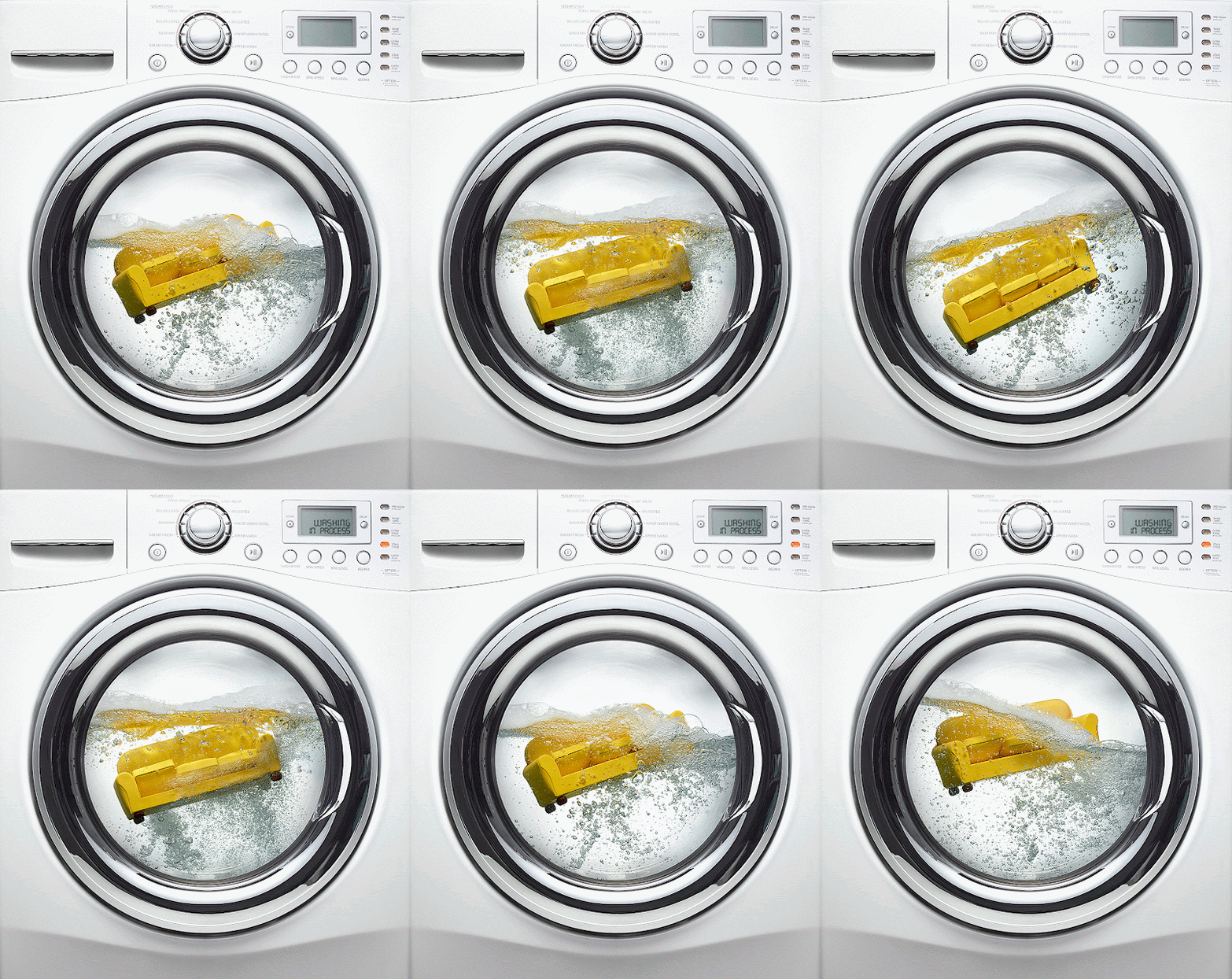
The washing machine is an example of a sequential control system. A system operating with sequential control is one where a number of preset operations are performed in sequence. The control may be implemented as event-based, where the next action cannot be performed until the previous action is completed. Another mode of sequential control is termed "time-based", where the operations are sequenced with respect to time. Example: An example of a time-based sequential control system is shown in the following Figure 1. The pump (fill valve) is switched ON for a particular time to fill enough water into the tank to fill it to approximately the correct level. Following this, the pump is switched OFF. Figure 1: Time-based sequential control Among these two modes, event-based control is intrinsically more reliable than time-based control. An example of an event-based sequential control syste...
Piezoelectric Pressure Sensor A piezoelectric sensor is a device that uses the piezoelectric effect to measure changes in pressure, force, strain or temperature by converting them to an electrical charge. The word piezo is derived from the Greek word piezein which means “Press” or “Stress”. The piezoelectric effect is observed in various materials available in different forms such as crystalline, ceramics, lead-free piezoceramics, semiconductors, and polymers. The Lead zirconate titanate and quartz crystal are the common types of piezoelectric materials used in piezoelectric pressure sensors. The piezoelectric material can be referred to as a bidirectional transducer as it generates an internal voltage resulting from an applied pressure or mechanical force due to piezoelectric the effect, contrarily, it can also generate internal pressure or mechanical strain when an electric field is applied due to the inverse piezoelectric e...
Gears can be classified: According to the relative position of their axes According to the type of contact between the surface of the gear Figure 1: Types of gears Parallel shaft Depending upon the teeth of the equivalent cylinder, i.e., straight or helix We have following parallel shaft gears Spur gears: straight teeth parallel to the axes of the wheel Helical gears: teeth are curved and inclined to the shaft axis. Two mating gears have the same helix angle but have teeth of the opposite hand Herringbone gears: A double-helical gear is equivalent to a pair of helical gears attached together, one has a right-hand helix and other a left-hand helix Figure 2: Spur gear Figure 3: Helical gear Figure 4: Herringbone gear Intersecting gear Two non-parallel or intersecting shafts can be connected by means of bevel gears. Straight bevel gears: teeth are straight, radial to the point of intersection of the shaft axes, and vary in cross-section throughout their length. Used to conn...

Comments
Post a Comment